FRAME
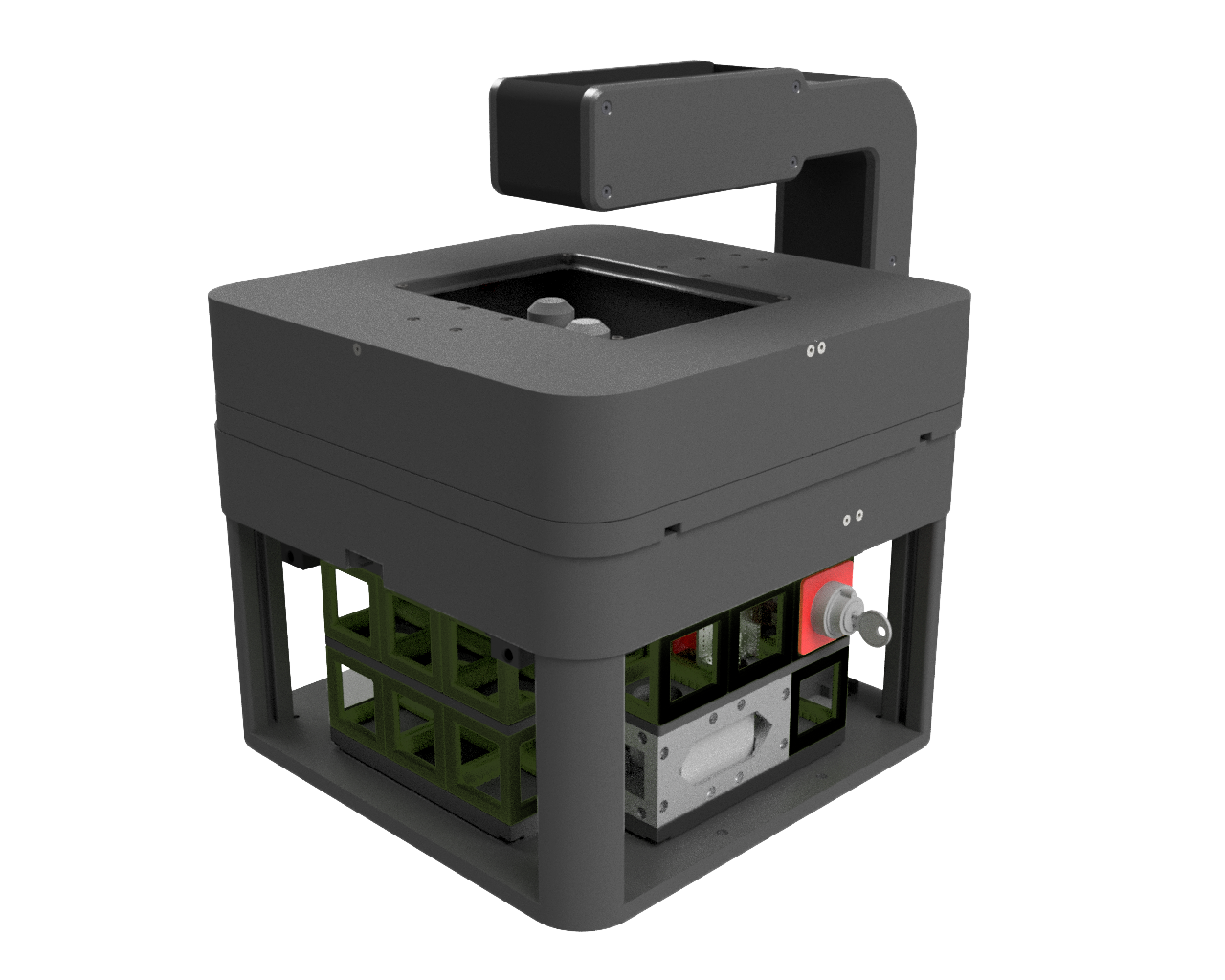
Fast Rigid Automated Microscope Engine
A fully motorized microscope platform with sub-micrometer precision, modular optics, and open-source software. Swap imaging modes in seconds. Control everything from a browser. Integrate with any workflow through our REST API.
Imaging results
Captured on FRAME systems in real labs
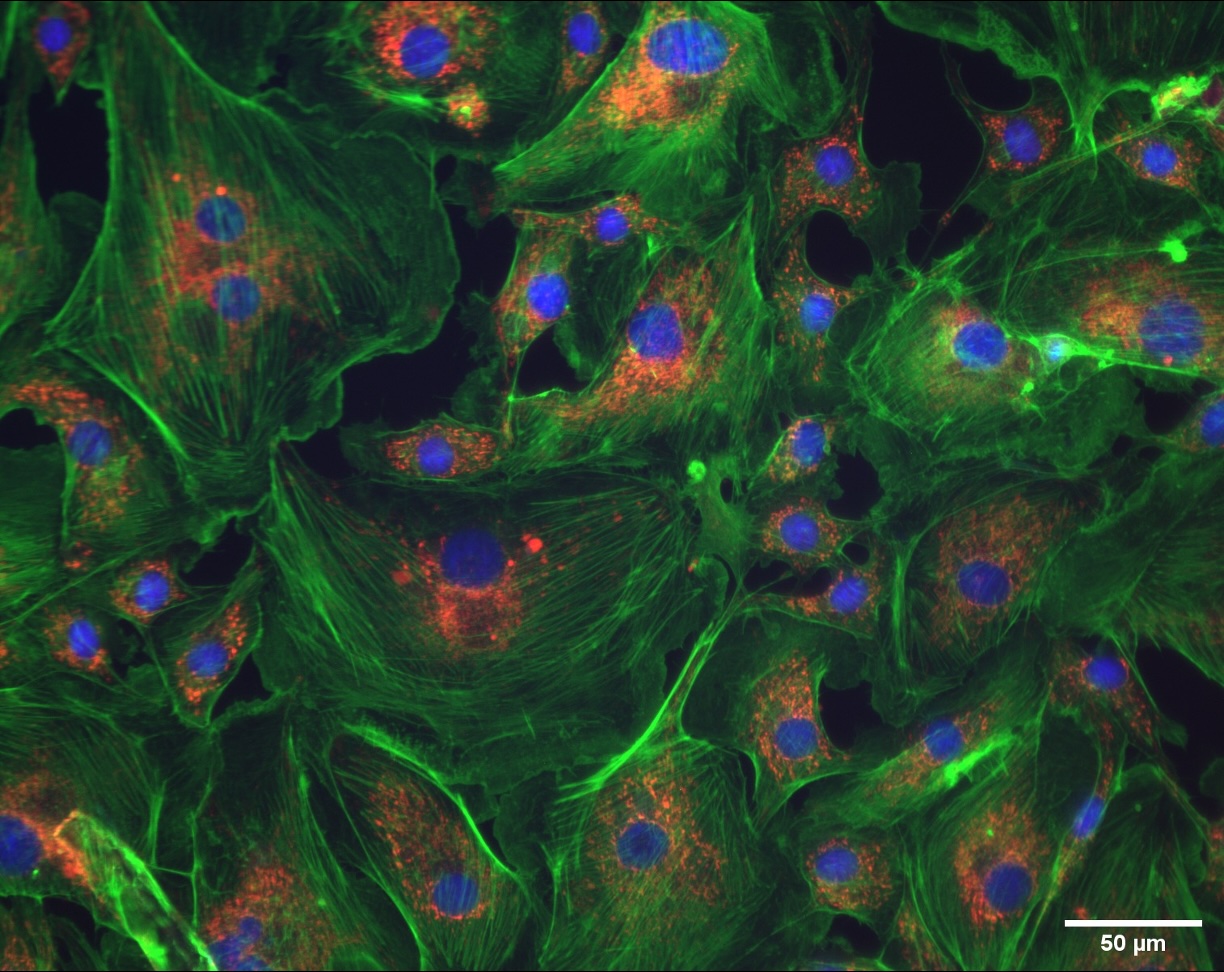
Fluorescence — AF488 FluoCells
Multi-tile automated scan with stitching
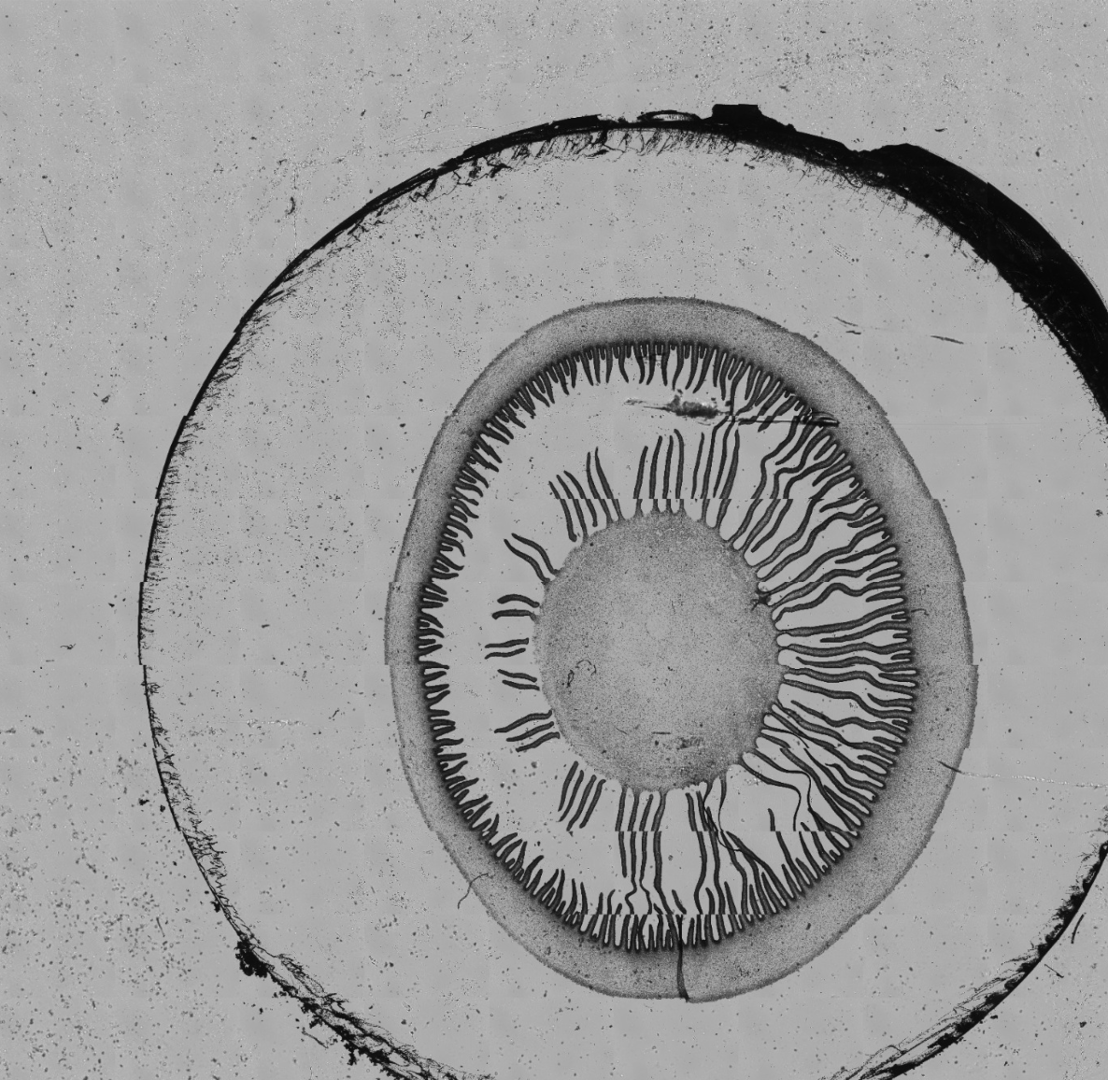
Histology — H&E Tissue Section
Automated slide scanning, 130x90 mm coverage
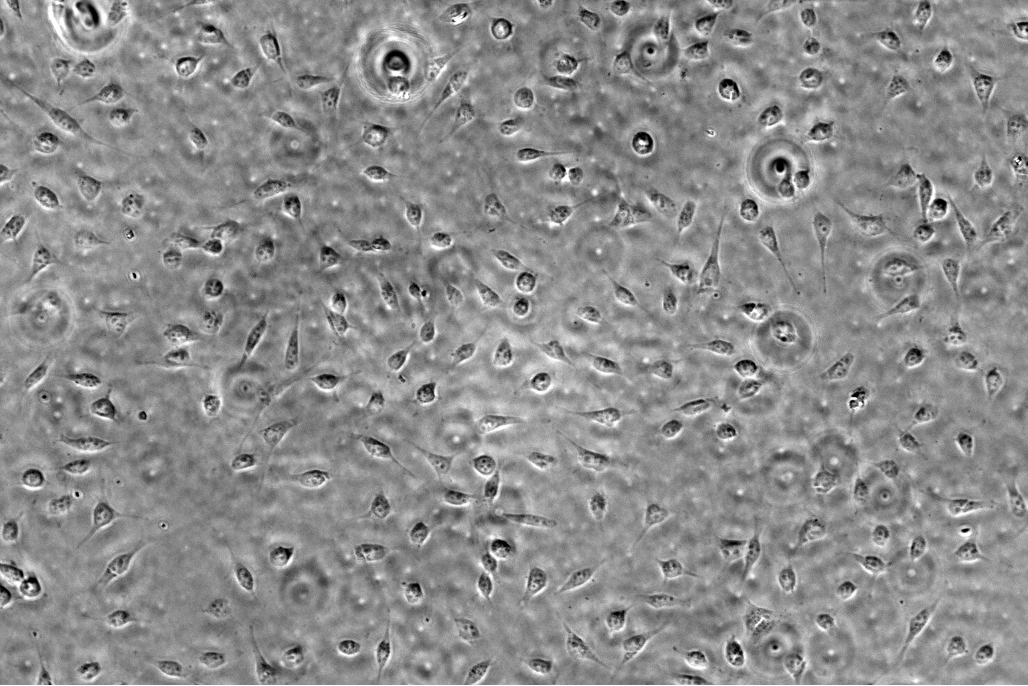
Phase Contrast — Live Cells
DPC and quantitative phase imaging
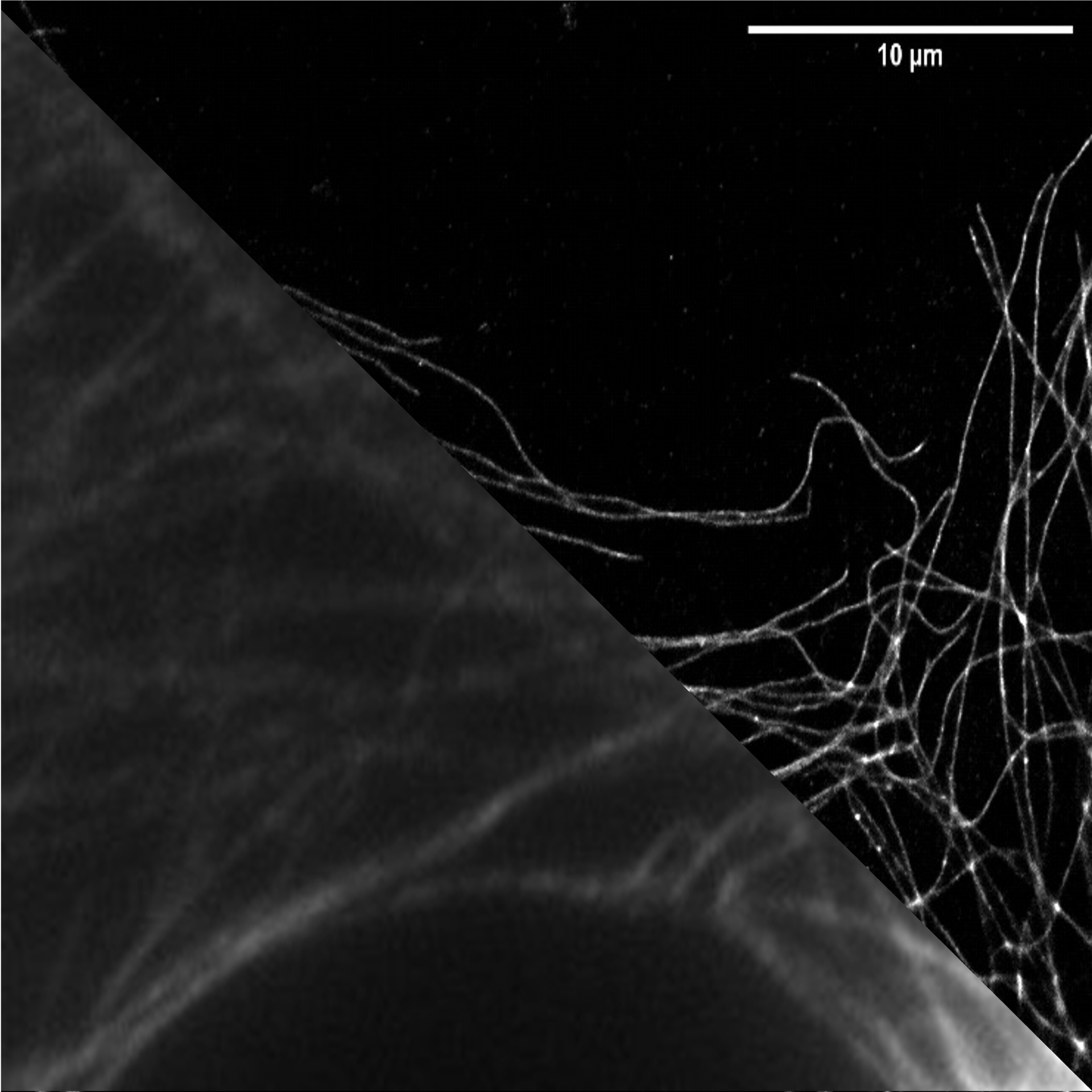
Super-Resolution — dSTORM
Single-molecule localization microscopy
How FRAME works
The optics stay fixed. Only the sample moves.
Modular optical column
FRAME's optical path is built from standardized UC2 cube modules. Each cube holds one optical element (objective, dichroic, filter, camera). Slide cubes in and out to switch imaging modes without realignment.
Rigid motorized stage
A precision XYZ stage moves the sample beneath the fixed optics. This separation means you can add components — an incubator, a pipetting robot, additional cameras — without disturbing the optical alignment.
Open-source control
FRAME runs on ImSwitch, a modular open-source microscopy control software. Access via web browser, game controller, Python API, or REST endpoints. Docker-based deployment enables remote updates.
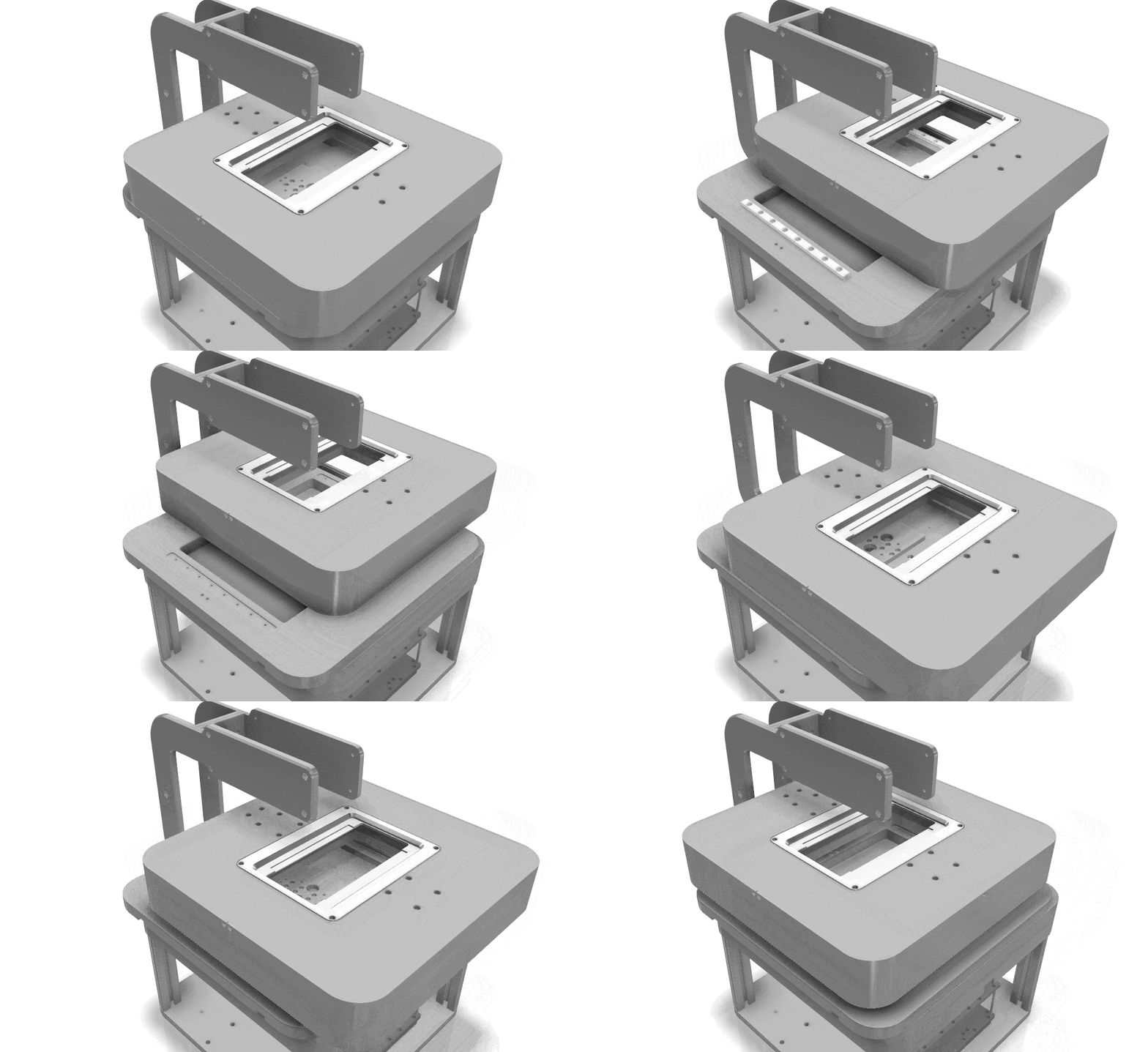
Modular by design
Pre-test optical paths externally, then slide them into FRAME.
Swap modules in seconds
Brightfield today, fluorescence tomorrow. Change your dichroic, add a laser, or insert a phase ring — no tools, no realignment. All with our cubes.
Standard objectives
Use our selection of high-quality objective lenses or any RMS or M25-thread infinity-corrected objective. Your existing optics work with the FRAME.
Your choice of camera
Support for USB3 (e.g. HIK Vision, Daheng), CSI (Raspberry Pi), but also for scientific cameras (e.g. Andor, Tucsen), all implemented in ImSwitch.
Browser-based control
Full microscope control from any device on your network. ImSwitch GUI, Jupyter Notebooks, Arkitekt and SiLa2, or raw REST API calls — your choice.
Automation-ready
REST API and SiLA2 drivers for integration with liquid handlers, robotic arms, and automated workflows. Ready for lab-in-a-loop setups.
Fully open source
Hardware (CAD), firmware (ESP32), and software (ImSwitch) — all open. Modify anything. No vendor lock-in. Publish your methods with full transparency.
Specifications
FRAME v1.0 — Configurable to your needs
| XY Travel Range | 130 x 90 mm |
|---|---|
| Z Travel Range | 11 mm |
| Positioning Precision | < 1-5 um (closed-loop possible) |
| Stage Speed | Up to 10 mm/s |
| Objectives | Any RMS/M25-thread infinity-corrected (4x-100x) |
| Illumination (Epi) | Multi-channel LED (405/450/588/532/575/635 nm) or Laser (ask for custom wavelengths and combinations) |
| Illumination (Trans) | White LED matrix, DPC-capable |
| Filter Cubes | Modular UC2 cubes, user-swappable |
| Camera | USB3 (Allied Vision, Basler, Daheng) or CSI |
| Compute | Raspberry Pi 5 (with YouYeeToo X1 in the development |
|---|---|
| Software | ImSwitch using Raspberry Pi OS (open source, Python, https://github.com/openUC2/rpi-imswitch-os) |
| Control Interfaces | Web browser, REST API, Python SDK, PS4 controller, CAN Bus |
| Communication | CAN Bus, WiFi, USB-Serial |
| Firmware | UC2-REST (ESP32, open source, https://github.com/youseetoo/uc2-esp32) |
| Imaging Modes | Brightfield, Fluorescence, Phase Contrast, DPC, FLIM*, dSTORM* |
| Footprint | ~300 x 300 x 350 mm (depending on configuration) |
| Sample Holders | Slides, well plates, custom fixtures |
| Certifications | CE (available on request) |
* With additional modules. Specs may vary by configuration.
How fast can you go?
Traditional vendor path vs. openUC2
Traditional vendor
With openUC2
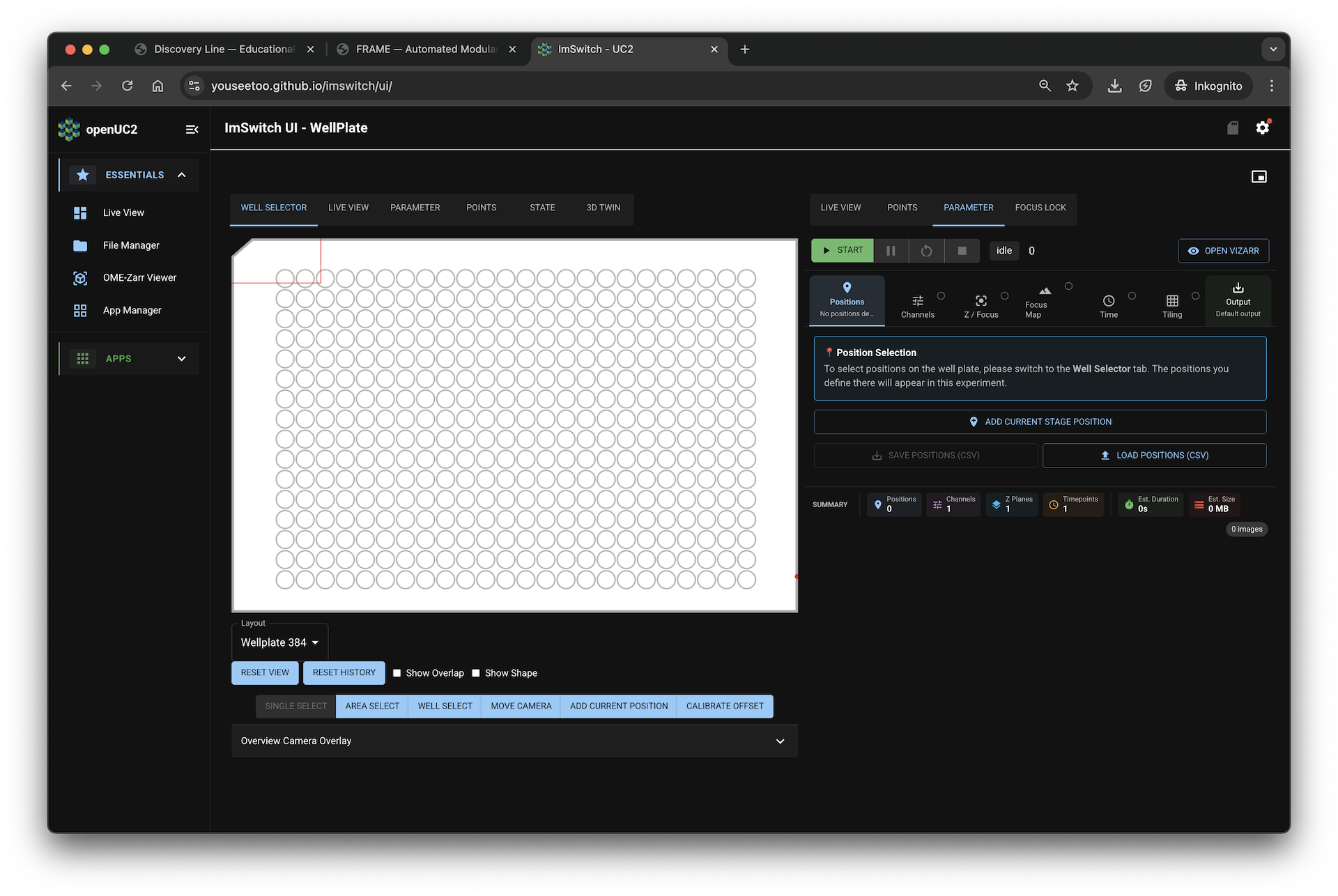
Software: ImSwitch
FRAME is controlled by ImSwitch — a community-developed, modular microscopy control software written in Python. It provides a full GUI for acquisition, hardware control, and basic image processing, accessible from any web browser on your network.
For advanced users, the REST API and Python SDK allow full scripting of experiments, integration with Jupyter Notebooks, and connection to external automation systems. Docker-based deployment means you can update your microscope remotely.
“We needed a microscope that could handle both brightfield and fluorescence whole-slide imaging, be tailored to our specific assays, and fit into our automated liquid handling workflow. FRAME let us do all of that without being locked into proprietary software..”— Franzi, University of Helsinki
Ready to configure your FRAME?
Tell us about your imaging needs and we'll propose a configuration.